
The Architecture of Physical-Digital Identity Systems

A camera sees a physical target. An application needs to know which particular target it is dealing with. Between those two events lies an architecture, not a single scan.
A physical-digital identity system connects an observable identifier on a physical target to a maintained digital record and makes the resolved identity available to other systems. Its purpose is to answer which one? under defined operating conditions. It does not make every downstream decision on its own.
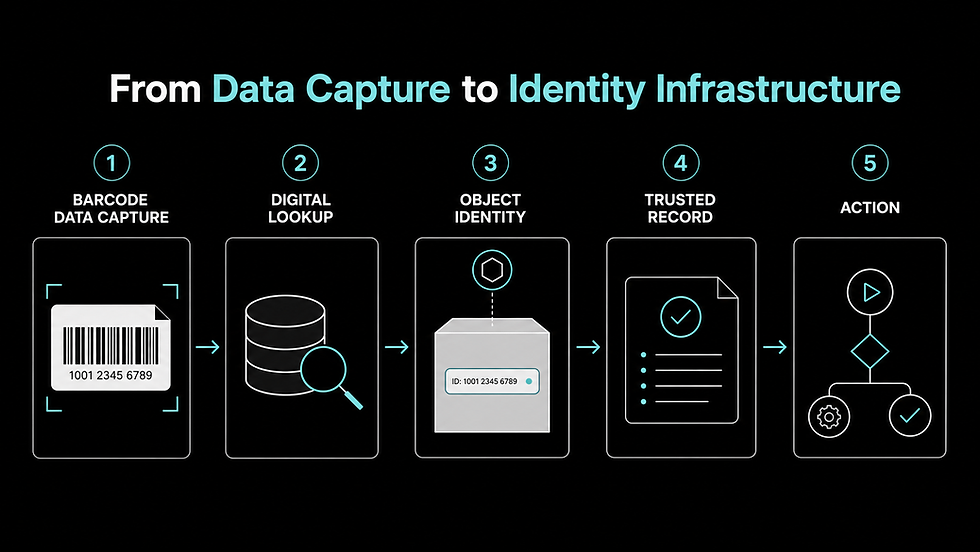
The components of a physical identity system

1. A physical identity carrier. A marker or other observable feature must be associated with a specific target. Placement, durability, size, and visibility affect whether a machine can observe it when needed. The identifier should be managed as part of an identity scheme, rather than treated as a decorative label.
2. A camera and recognition stack. The camera supplies an image. Recognition software detects the carrier and reads its identifier. This step has operational limits: distance, motion, angle, occlusion, and lighting determine what can be observed. A classification model may also describe the scene, but it serves a different purpose.
3. Identity resolution. The observed identifier is mapped to the intended entity in an identity service. Resolution should produce an unambiguous result or a clear failure state. If the identifier is missing, unreadable, or associated with conflicting records, a system should not quietly substitute a guess.
4. A system of record. The identity points to information maintained elsewhere: an asset record, location, status, ownership, work instruction, or relevant policy. A persistent identity can remain stable even as those attributes change. This separation is what makes identity useful beyond a single scan event.
5. Application controls. The application combines identity with current context and rules before it acts. Identifying a marked asset does not prove that a proposed action is authorized, that the asset is genuine in every threat model, or that the environment is safe. Those are separate checks.
The boundary between recognition and resolution
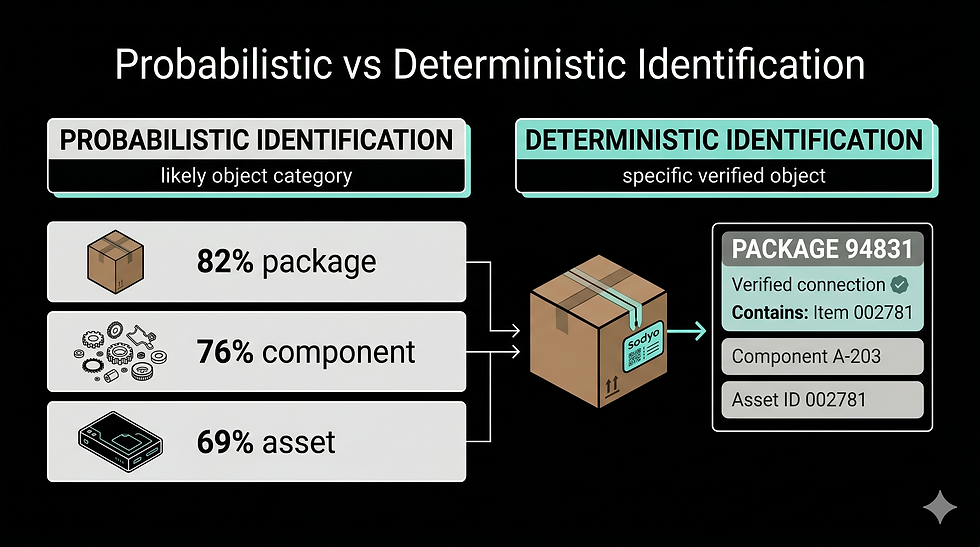
Recognition produces a machine-readable observation. Resolution turns that observation into a reference to a specific entity. The distinction is central to Recognition vs Identity in Physical Systems. Two items can share a visual class while having different identities, records, and permitted workflows.
Consider two visually similar product packages. A vision system may classify both as the same product, while an authentication workflow needs the specific marked item's identity to retrieve its verification record. In a RangeMark landing scenario, the same distinction separates detecting a landing area from identifying the designated landing target.
What makes the architecture persistent?
Persistence means the identity continues to refer to the intended entity across observations and over time. It does not mean the camera must see the target continuously. The system must define how a marker is assigned, how records change, how a target is reacquired after losing sight, and how retired or reassigned identities are handled.
These governance choices are as important as the optics. A technically readable marker linked to an outdated record can still produce the wrong operational result. The Identity Layer for the Physical World explains why the identity layer must connect physical observation with digital continuity.
Where Sodyo fits
Sodyo builds the infrastructure that gives physical objects persistent digital identity. Its visual marker system, recognition stack, and identity resolution protocol occupy the path from marked physical target to resolved identity. Other systems supply the surrounding perception, business records, policies, and execution.
This division of responsibility lets different applications build on a common identity foundation. Qapture connects a marked broadcast or outdoor touchpoint to its digital experience; Verimark connects a product identity to authentication and governance checks; RangeMark connects a marked landing target to the autonomous system using it. Each application owns its records, rules, and outcome. The common architecture carries a particular observed target into the appropriate digital workflow.
For why this precision matters to AI-driven operations, see Why AI Systems Need Deterministic Identity.
The architecture is complete only when an observation can be tied to the right record, with explicit handling for uncertainty and failure. If you are designing that handoff, talk to Sodyo about your environment and integration requirements.

Comments