
From Physical Identity to Digital Action: What Sodyo Enables

A physical identity becomes valuable when an application can use it. A broadcast touchpoint connects a viewer to an experience. A marked product connects to an authentication workflow. A designated landing target gives an autonomous system a specific reference during approach.
Sodyo provides the visual identity foundation that connects a particular target in view to the relevant digital record and response. That connection lets applications act on the identity of the target, alongside the context and rules of their own domain.

Qapture: turn a recognized touchpoint into engagement
A marker within a broadcast or outdoor advertisement provides an entry point to a digital experience. Recognizing the intended touchpoint lets the application connect the viewer to the associated content, offer, or interaction.
Qapture applies Sodyo's recognition technology to this engagement path. The value is a connection between the content people encounter and an experience they can participate in. A maintained identity also provides a reference through which the associated digital content can be managed.
Verimark: connect product identity to authentication
Recognizing a product category tells an application what kind of item it sees. A product-authentication workflow needs a more specific reference: the identity of the marked product and its associated record.
Verimark applies Sodyo's identity foundation to product authentication and brand protection. The resolved identity enables the application to retrieve relevant information, apply its verification checks, and return the appropriate response. Identity supplies the connection that makes those product-specific checks possible.
How Physical Assets Become Digital Entities explains how that physical-to-digital association is created and maintained.
RangeMark: give autonomous systems a designated target
An aircraft can detect a possible landing area while still needing to identify the target assigned to its mission. RangeMark applies visual identity to that requirement, helping connect the marked target in view to a specific reference the aircraft's systems can use.
Acquisition during approach and reacquisition after loss of sight support that connection over successive observations. Target identity complements the navigation and flight-control systems that determine how the aircraft approaches and lands.
A common foundation for different responses
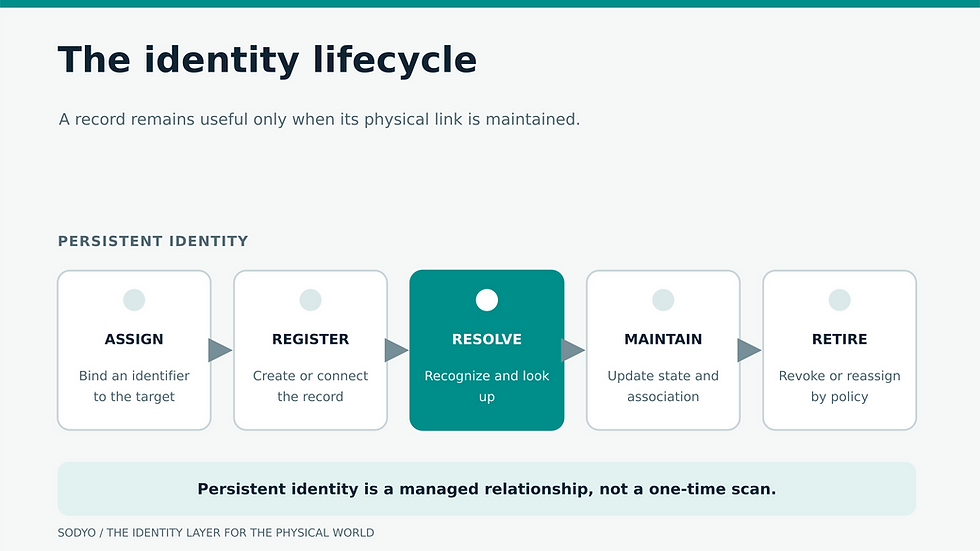
Across these applications, the underlying path is shared: observe the marked target, recognize its identifier, resolve its identity, and pass that reference to the application. The application retrieves relevant context and initiates its response.
This is how physical identity supports a trusted physical-digital interaction: the response can be tied to the intended target and its maintained record. Each application supplies the authentication, permissions, or operational decisions appropriate to its use case.
The Architecture of Physical-Digital Identity Systems maps this connection. Why AI Systems Need Deterministic Identity explains why a specific reference matters when systems must distinguish similar targets.
What Sodyo enables
Sodyo builds the infrastructure that gives physical objects persistent digital identity. Its proprietary marker and recognition technology provides a shared foundation for applications with distinct customers and outcomes.
For partners, the opportunity is to connect a physical encounter to a useful digital response: engagement with the relevant experience, authentication of a particular product, or interaction with a designated autonomous target.
Talk to Sodyo about the physical targets your application needs to identify and the digital actions those identities should enable.


Comments