
Machine Vision Is Becoming the Interface to the Physical World

Introduction
For decades, the primary interface between the physical world and digital systems was human input.
People typed information into software.
They scanned labels.
They inspected products.
They confirmed locations.
They interpreted signs, objects, and context.
That model is changing.
Machines are increasingly expected to interpret the physical world directly.
Cameras, sensors, and computer vision systems are becoming the interface between physical environments and digital systems.
This shift is central to Physical AI.
Machine vision allows software systems to see the world.
But seeing is not the same as knowing.
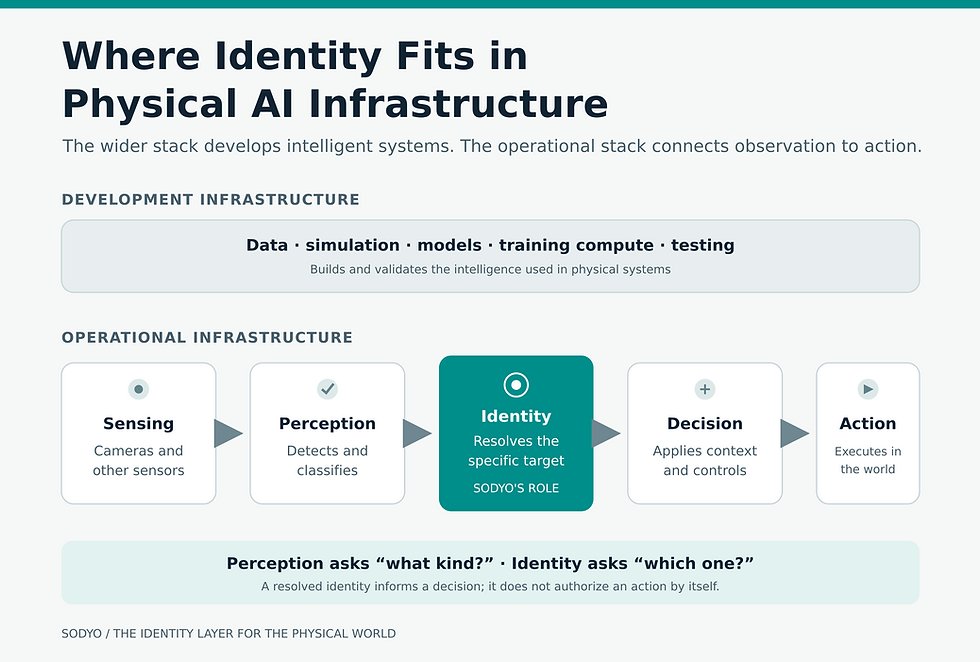
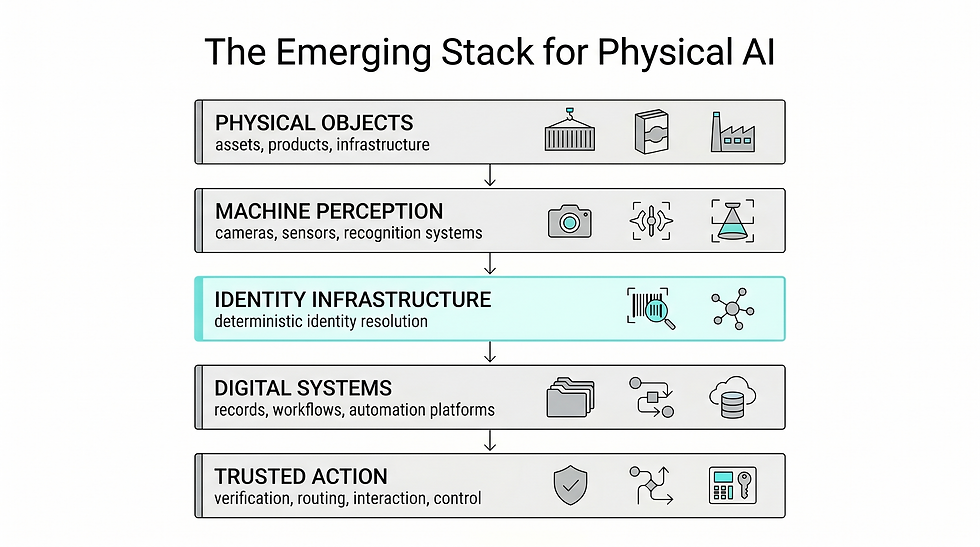
For machine vision to become reliable infrastructure, it must connect perception to identity, digital records, and trusted action.
For a broader view of the infrastructure behind Physical AI, see The Emerging Stack for Physical AI.

What Is a Machine Vision Interface?
A machine vision interface is the point where cameras, sensors, and computer vision systems allow digital systems to observe and interpret physical environments.
In traditional software systems, interfaces are digital.
A user clicks a button.
A device sends a signal.
An application calls an API.
A database receives structured input.
In physical environments, the interface is different.
The system must observe real-world objects and determine what they represent.
Machine vision creates that interface.
It allows machines to detect objects, read visual signals, interpret movement, recognize patterns, and support automated decisions.
But machine vision becomes most valuable when it connects what the machine sees to what digital systems know.
That requires identity infrastructure.
Why Machine Vision Matters
Machine vision is becoming important because machines are moving into environments that were not originally designed for software.
These environments include:
Warehouses
Factories
Logistics networks
Retail environments
Transportation systems
Infrastructure sites
Public spaces
Broadcast and screen-based environments
Security and authentication environments
In each environment, machines need to interpret physical objects and events.
They may need to determine whether a package is present, whether a product is authentic, whether a component is correct, whether an asset is in the right location, or whether an interaction should occur.
Machine vision gives systems access to physical reality.
It allows digital systems to observe what is happening outside the screen.
This is why machine vision is becoming a core interface for Physical AI.
Machine Vision Is Not the Same as Human Vision
Humans interpret the physical world using memory, context, experience, and judgment.
A person can look at a package and infer where it belongs.
A warehouse worker may recognize an object because they know the process.
A technician may understand a machine because they have seen it before.
A viewer may understand a screen because they know the content.
Machines do not interpret context the same way.
A camera captures visual information.
A computer vision model analyzes patterns.
A system may classify an object based on training data.
But without identity, the system may still not know which specific object is present.
Human vision can often rely on inference.
Machine vision requires infrastructure.
From Seeing to Knowing
Machine vision begins with detection.
A system can detect that an object exists.
It can classify that object as a package, product, component, sign, screen, vehicle, or asset.
But reliable automation often requires more.
The system needs to know:
Which specific object is present
Whether the object is trusted
Which digital record applies
What workflow should be triggered
What action is allowed
This is the difference between seeing and knowing.
Machine vision allows the system to see.
Identity infrastructure allows the system to know.
That distinction is central to Physical AI.
Why Object Recognition Alone Is Limited
Object recognition is useful.
It allows machines to classify physical objects.
A vision model may identify a box, bottle, tool, vehicle, label, screen, or machine part.
But object recognition typically answers a category-level question.
What type of object is this?
Many physical workflows require a more specific answer.
Which exact object is this?
For example:
Not just a package, but Package 94831
Not just a product, but Product Unit 59402
Not just a component, but Component A-203
Not just an asset, but Infrastructure Node 17
When multiple objects look similar, object recognition may not be enough.
A system may correctly classify the object type and still fail to resolve the object identity.
This is why machine vision must connect to identity systems.
The Role of Identity Infrastructure
Identity infrastructure gives machine vision systems a way to resolve what they observe.
It allows physical objects to be associated with persistent digital identities.
This connection allows machines to determine:
What specific object is present
Whether the object is valid
Whether the object is trusted
Which digital record applies
What action should occur
Without identity infrastructure, machine vision remains limited to perception.
With identity infrastructure, machine vision becomes a gateway to digital systems.
This is the infrastructure layer that allows physical objects to become machine-readable.
For more on this layer, see The Identity Layer for the Physical World.

Machine Vision and Machine-Readable Environments
Machine vision becomes more reliable when physical environments are designed for machine interpretation.
A machine-readable environment gives vision systems structured signals they can detect and resolve.
These signals may include machine-readable identity markers, visual identity systems, environmental references, or other machine-detectable identifiers.
The point is not simply to make objects visible.
The point is to make them interpretable.
A machine-readable environment allows vision systems to move from detection to identity.
This creates the foundation for reliable interaction between physical objects and digital systems.
Machine Vision as an Infrastructure Layer
Machine vision is often discussed as a technology feature.
In the context of Physical AI, it is better understood as infrastructure.
It is the sensing layer that allows digital systems to observe physical environments.
But infrastructure must be dependable.
It must work across real conditions.
That includes:
Distance
Motion
Changing light
Different surfaces
Multiple objects
Operational noise
Variable environments
Partial obstruction
Machine vision systems must therefore be designed not only to detect, but to support reliable system decisions.
That requires connection to identity and verification layers.
From Interface to Action
An interface is valuable because it enables action.
A keyboard allows a person to enter data.
An API allows one system to call another.
A machine vision interface allows digital systems to receive structured input from the physical world.
But input alone is not enough.
The system must determine what the input means.
When machine vision connects to identity infrastructure, it can support trusted action.
Examples include:
Routing a package
Authenticating a product
Updating an asset record
Triggering an inspection
Enabling an access workflow
Delivering an interactive experience
Supporting automated control
In each case, machine vision provides the observation.
Identity infrastructure provides the certainty.
Digital systems provide the context.
Automation provides the action.
Why This Matters for Physical AI
Physical AI depends on machines that can operate in real-world environments.
To do that, they need more than computational intelligence.
They need a way to interpret the physical world reliably.
Machine vision is the interface.
Identity infrastructure is the logic that makes the interface useful.
Together, they allow AI systems to move from visual input to trusted interaction.
Without this connection, AI systems may see physical environments but remain uncertain about what they are seeing.
With this connection, physical objects can become trusted digital entities that machines can identify, verify, and act upon.
Key Takeaways
Machine vision is becoming a primary interface between physical environments and digital systems.
Machine vision allows systems to detect and interpret physical objects.
Object recognition is useful, but it does not always resolve specific object identity.
Identity infrastructure connects machine vision to digital records and trusted action.
Machine-readable environments make machine vision more reliable.
Physical AI depends on machine vision connected to identity infrastructure.
Frequently Asked Questions About Machine Vision as an Interface
What does it mean for machine vision to be an interface?
It means machine vision acts as the connection point between physical environments and digital systems, allowing software to observe and interpret the real world.
Is machine vision enough for Physical AI?
No. Machine vision provides perception, but Physical AI also requires identity infrastructure, digital system integration, and trusted action.
How is machine vision different from identity infrastructure?
Machine vision detects and recognizes physical objects. Identity infrastructure determines which specific object is present and connects it to a digital record.
Why does machine vision need identity?
Machine vision needs identity because many physical workflows require machines to know exactly which object they are interacting with, not just what type of object it appears to be.
What is the role of machine-readable environments?
Machine-readable environments provide structured signals that allow machine vision systems to detect and resolve object identity more reliably.
Conclusion
Machine vision is becoming the interface between physical environments and digital systems.
It gives machines the ability to see the physical world.
But seeing is only the first step.
For machine vision to support reliable Physical AI, it must connect to identity infrastructure, digital records, and trusted action.
That is what turns visual perception into operational intelligence.
As AI systems continue moving into the physical world, machine vision will not function as a standalone capability.
It will become part of the infrastructure stack that allows machines to interpret, verify, and act on physical reality.
About Sodyo
Sodyo builds the infrastructure that gives physical objects persistent digital identity.
Its platform enables machines and digital systems to resolve identity from the physical world, supporting trusted interaction across engagement, authentication, logistics, and infrastructure environments.

Comments